
EU membership, the euro, English and a Mediterranean lifestyle. Malta can be particularly compelling for globally mobile founders, investors and families whose income and wealth sit across multiple countries and who can benefit from source-and-remittance taxation.

Malta is not a headline-rate jurisdiction. It is a residence + domicile + remittance jurisdiction.
Individuals who are ordinarily resident and domiciled in Malta are taxed on a worldwide basis. Qualifying residents who are not domiciled may instead fall within Malta's source-and-remittance framework.
| Factor | Malta 2026 | Why it matters |
|---|---|---|
| Tax residence | More than 183 days makes you Malta tax resident for that year; someone arriving to establish residence may be resident from arrival. | Day counting matters, but intention and facts matter too. |
| Domicile | Domicile is separate from residence and turns on where you regard as your permanent home. | Two Malta residents may have very different tax bases. |
| Remittance basis | Resident non-doms can be taxed on Malta-source income/gains and foreign income received in Malta. | Cash-flow design and banking evidence become part of the tax strategy. |
| Foreign capital | MTCA guidance distinguishes capital remittances, including inheritances and proceeds from asset sales, from income remittances. | Segregating capital from income before the move can be critical. |
| Non-dom minimum | A €5,000 annual minimum can apply where foreign income reaches at least €35,000, subject to exceptions. | Keeping income offshore does not automatically mean zero Maltese tax. |
| Special schemes 2026 | TRP for EU/EEA/Swiss nationals and GRP for qualifying third-country nationals: typically 15% on foreign-source income remitted and 35% on other income, with minimum tax. | The ordinary non-dom route and special schemes should be modelled side by side. |
| 2027 reform | Legal Notice 195/2026 introduces the Individual Tax Programme from 1 January 2027, with €35,000 minimum annual tax for Global Resident and EU/EEA/Swiss Resident Status. | A 2026 move must be stress-tested against the rules that start in 2027. |
General information reviewed in September 2026. Malta has already enacted a special-programme reform taking effect on 1 January 2027; implementation should be rechecked immediately before action.
The advantage is not one magical rate. It is how your income profile fits the system.
EU non-dom logic
For the right profile, the remittance basis can limit Malta tax on certain foreign income that is not received in Malta.
EU + euro + English
A rare combination for founders who want European infrastructure without giving up an English-speaking professional environment.
International wealth
Malta can fit shareholders, investors and families with assets, accounts and income across multiple countries.
A livable island base
Valletta, Sliema and St. Julian's combine sea, services, schools and business connectivity in a compact geography.
Malta is often more compelling for globally diversified wealth than for someone simply searching for a low headline income-tax rate.
Remittance basis: the origin and traceability of money can matter as much as the amount.
Important detail: MTCA guidance presumes remittances used for ordinary living expenses are income unless proven otherwise.
That is why banking architecture before the move can matter almost as much as the residence application itself.
Ordinary non-dom or special programme. Model both before choosing.
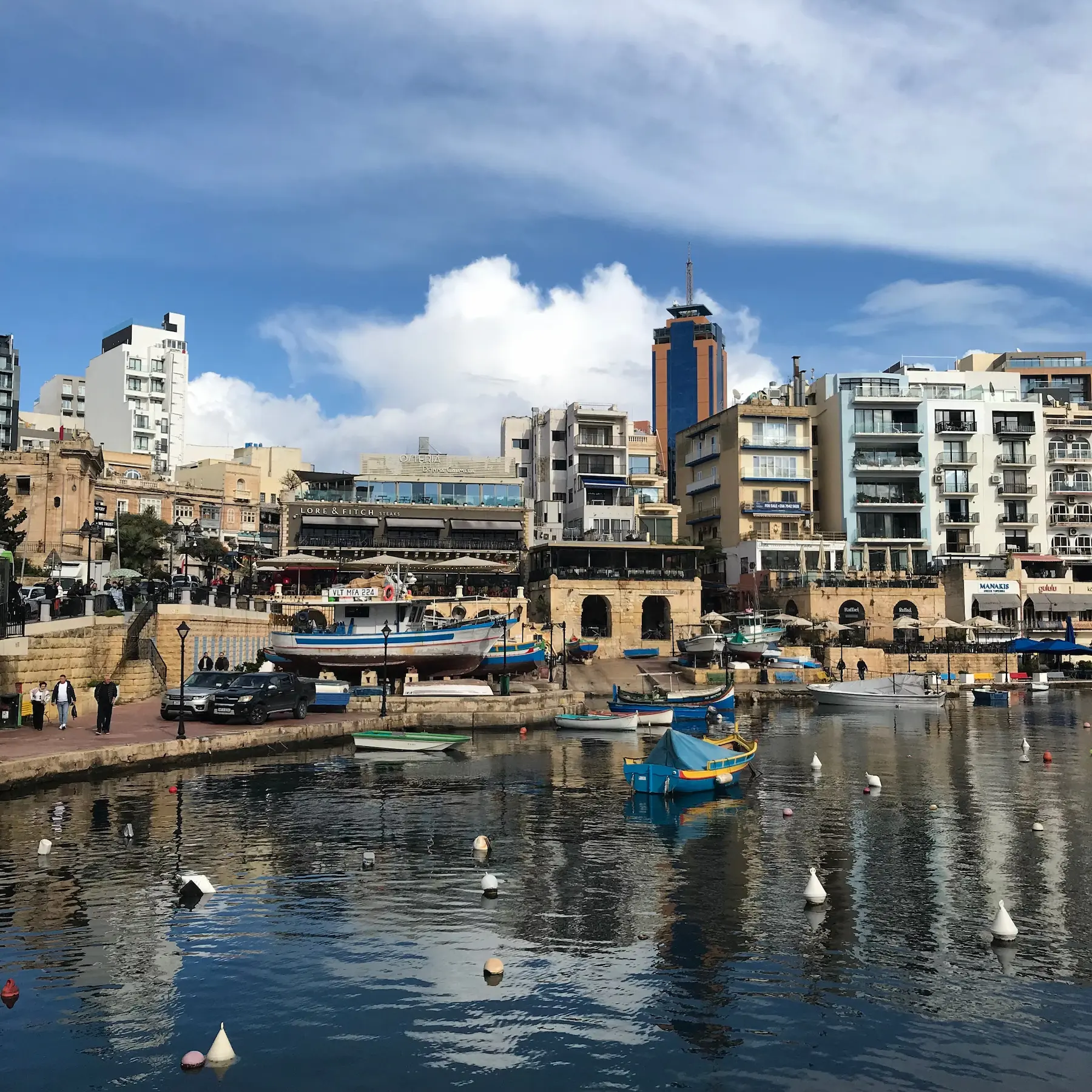
A European tax base that can also be a good life.
Malta's practical advantage is that a cross-border tax strategy can sit inside a compact, connected and English-speaking Mediterranean lifestyle. That makes genuine residence easier to build than in jurisdictions you only visit for paperwork.
Residence ≠ domicile
You can be Malta tax resident without acquiring a Maltese domicile, and that distinction can materially change the tax base.
→Foreign bank ≠ foreign income
The real question is where income arises and whether it is received in Malta.
→Tax status ≠ universal immigration status
Immigration routes depend on nationality and profile and should be coordinated separately.
→Move the strategy before moving the money
In Malta, sequence can change the tax outcome.
N30 Global maps residence, domicile, income, bank accounts, remittances, companies, wealth and your departure country before execution.
Map
Worldwide income, source of funds, accounts, companies, portfolio, family and exit country.
Compare
Ordinary non-dom, 2026 special-programme route and the post-2027 scenario.
Prepare
Housing, administrative residence, banking, capital/income segregation and evidence.
Implement
Coordinate local professionals and the tax timeline without breaking the structure.
We do not sell “Malta non-dom”. We model what it means for your actual income and wealth.
Malta may provide a strong new base. Spain will still look at where your real residence sits.
Malta tax residency: the questions that actually change the outcome.
Malta can be one of Europe's more sophisticated jurisdictions for internationally diversified wealth. That is exactly why it needs more planning than a simple low-rate regime.
When do I become Malta tax resident?
What does non-dom mean in Malta?
Is foreign income not remitted to Malta taxed?
What about gains on foreign assets?
Is there a minimum tax for non-doms?
Which special programmes apply in 2026?
What changes in 2027?
Can N30 Global coordinate implementation?
Malta can be powerful. If you know which income you want to move — and which you do not.
Before you relocate, we assess residence, domicile, income, wealth, banking and your departure country. Then we compare ordinary non-dom treatment, special programmes and the 2027 rules. If Malta fits, we design the roadmap and can coordinate implementation.
60 minutes · Private · No obligation
Own Your Money.